



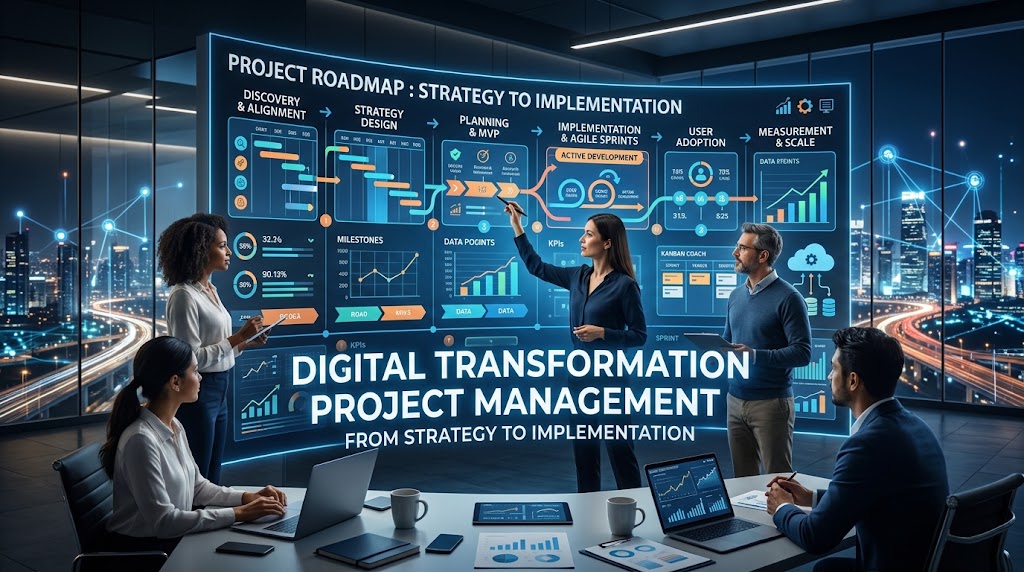
Digital Transformation Project Management: From Strategy to Implementation

Trainer (under Organization)
About This Course
Overview
Digital transformation succeeds or fails on execution, not ambition. This course uses practical examples from enterprise and government technology projects to show how digital initiatives are planned, managed, and delivered from strategy through to implementation.
What You Will Learn
- Digital transformation fundamentals and their impact on organisations
- Translating business problems into transformation opportunities through requirements analysis
- Building a structured project plan and managing key stakeholders
- Managing risk, scope, and timelines, and evaluating implementation readiness
Who This Course is For
- Project managers and team leads running digital initiatives
- Business analysts and process owners supporting transformation
- Professionals moving into digital project delivery roles
Conclusion
This course gives learners a practical framework for taking a digital transformation project from strategy to a measurable, successful implementation.
FAQ
Check the frequently asked questions about this course.
Curriculum Overview
This course includes 3 sections, 10 lessons, and 6h 5m of material.
This lesson introduces the concept of digital transformation, its purpose, and how it differs from digitisation and digitalisation. Participants will understand why organisations adopt digital transformation and how technology, people, processes, and data work together to improve organisational performance.
This reference guide provides participants with a practical overview of the key elements required for a successful digital transformation initiative. It introduces a simple transformation framework covering People, Process, Technology, Data, and Governance, together with a readiness checklist that participants can use to assess an organisation before starting a digital transformation project.
This quiz assesses participants’ understanding of the fundamental concepts of digital transformation, including digitisation, digitalisation, key transformation elements, organisational drivers, and common implementation challenges.
This lesson explains how organisations identify business problems, operational gaps, and opportunities that may benefit from digital transformation. Participants will learn how to analyse current processes, recognise pain points, understand stakeholder needs, and prioritise opportunities based on business value, feasibility, and impact.
This worksheet helps participants analyse an existing business process, identify operational pain points, understand stakeholder needs, and determine suitable digital transformation opportunities. Participants can use the template to compare the current and future state and prioritise opportunities based on business impact and feasibility.
Business Transformation is a critical component to success in our rapidly changing business world. Understanding business transformation is the first step in making sure you and your organization are ready when changes are necessary.
In this video I cover what business transformation is and how you can successfully apply that concept to your organization. Key steps include defining your business model, target operating model, organizational change strategy, and digital strategy. These key steps are important for any business process improvement, organizational change, or digital transformation initiative.
This quiz assesses participants’ understanding of how to identify business needs, analyse current processes, recognise stakeholder pain points, define future-state improvements, and prioritise digital transformation opportunities.
This lesson introduces the fundamentals of business analysis and requirements gathering in digital transformation projects. Participants will learn how to identify stakeholder needs, analyse business processes, distinguish different types of requirements, and document requirements clearly so that proposed digital solutions align with organisational objectives.
Requirement Gathering Techniques For A Business Analyst is the topic of this video. I will showcase elicitation techniques in business analysis.
This quiz assesses participants’ understanding of business analysis, stakeholder identification, requirements gathering techniques, requirement types, prioritisation, validation, and traceability.
Course Certificate
Course Specifications

Start and Master Your Skills!
Contact Us


Reply to Comment