



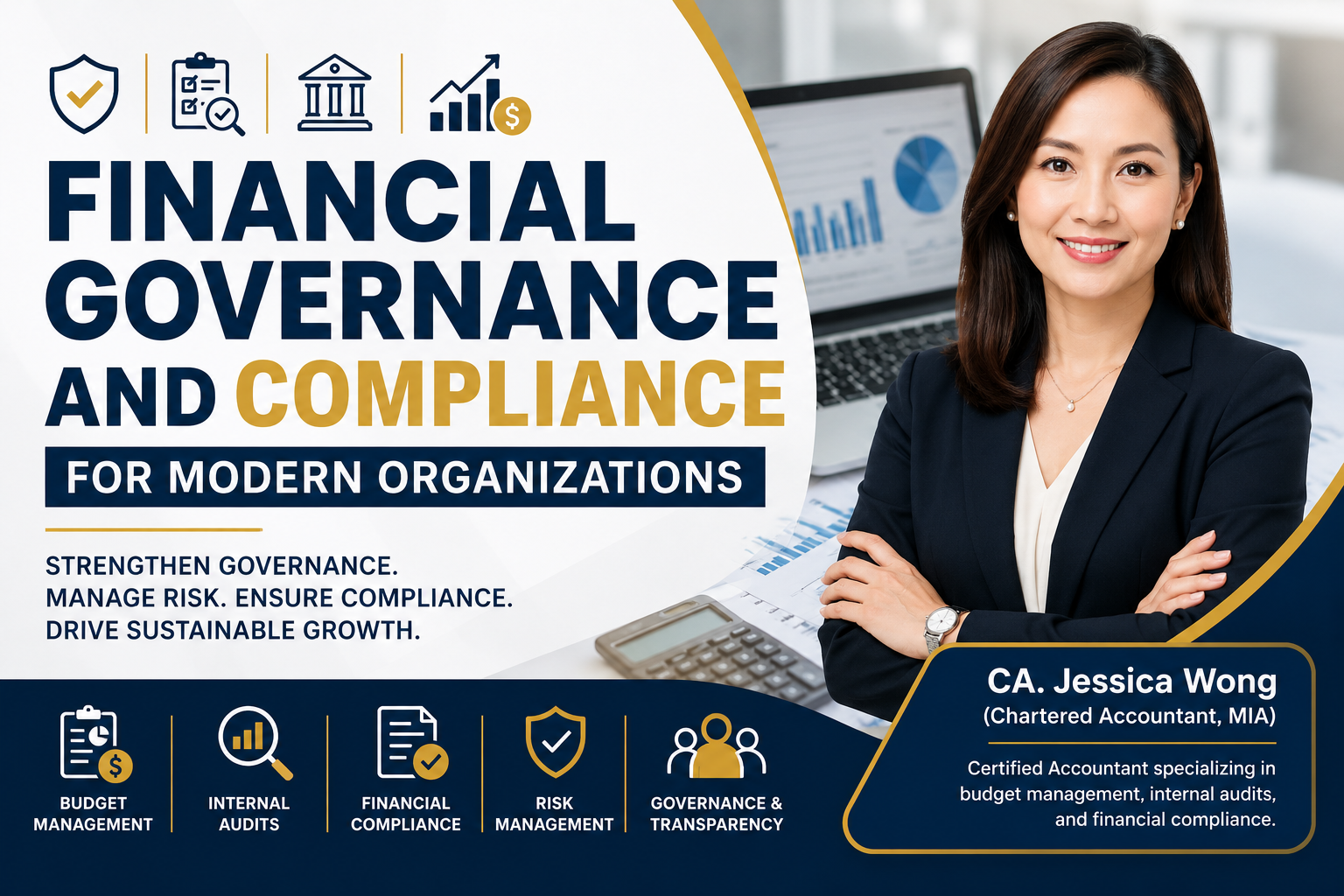
Financial Governance and Compliance for Modern Organizations

Trainer
About This Course
Overview
Strong financial governance supports far more than accurate bookkeeping; it underpins accountability, transparency, and stakeholder confidence. This course introduces the principles of financial governance, internal control, and regulatory compliance as they are applied in modern organisations.
What You Will Learn
- Financial governance frameworks and budget management fundamentals
- Internal controls and the role of internal audit
- Financial risk management and accurate financial reporting
- Regulatory compliance requirements and how they are monitored
Who This Course is For
- Finance personnel, auditors, and administrators
- Managers and business owners accountable for budgets
- Professionals strengthening their governance knowledge
Conclusion
This course connects sound financial practice to organisational resilience, preparing learners to support transparent and compliant decision-making.
FAQ
Check the frequently asked questions about this course.
Curriculum Overview
This course includes 5 sections, 20 lessons, and 10h 40m of material.
Learn the foundational principles of financial governance and compliance, including accountability, transparency, internal controls, regulatory requirements, and their importance in supporting organizational success.
A practical guide covering financial governance principles, accountability, compliance requirements, internal controls, risk management, and best practices for maintaining financial integrity within organizations.
The paper on Governance, Risk Management, Compliances and Ethics has been introduced to provide
knowledge on global development on governance, risk management, compliances, ethics and sustainability
aspects and best governance practices followed worldwide.
This Paper is divided into four parts: Part I deals with Governance, Part II deals with Risk Management, Part III
deals with Compliances and Part IV deals with Ethics & Sustainability.
Assess your understanding of financial governance principles, compliance requirements, accountability, transparency, and internal control systems.
Learn the fundamentals of budgeting, financial planning, cost management, and financial monitoring to support effective organizational decision-making and sustainable growth.
A practical guide covering budgeting principles, financial planning, budget monitoring, variance analysis, cost control strategies, and best practices for effective financial management.
This budgeting method I talk about in today's video really changed the way I view my own finances. It's called the P&L Method, or running your life like you would a business. Every month, I have my own personal P&L sheet, and I've also created one for you guys so you can budget on your own today too.
Test your understanding of budgeting principles, financial planning, budget monitoring, variance analysis, and cost control practices.
Learn the purpose of internal controls and internal audits, their role in strengthening governance, preventing fraud, managing risks, and improving organizational performance.
A practical guide covering internal control frameworks, audit processes, risk assessment techniques, fraud prevention measures, and governance best practices.
In this video, Members of the Firm Erin Clark and Kevin Stouffer explore fraud prevention controls tailored for local governments. Learn about effective internal controls, the risks of not having them in place, and real-world examples to help you protect your organization’s assets and reputation.
Evaluate your understanding of internal controls, auditing practices, fraud prevention, risk management, and governance principles.
Learn how organizations identify financial risks, implement mitigation strategies, maintain regulatory compliance, and strengthen governance frameworks to support sustainable operations and stakeholder confidence.
A practical guide covering financial risk identification, risk assessment, mitigation strategies, compliance frameworks, ethical governance, and best practices for managing organizational risks.
In this video, we dive deep into the world of Risk Management, exploring the essential concepts and strategies that every organization must know to protect its interests and ensure long-term success.
All About GRC - Governance, Risk Management, and Compliance
Test your understanding of financial risks, compliance requirements, governance principles, risk mitigation strategies, and ethical business practices.
Review the key lessons learned throughout the course and explore emerging trends that are shaping the future of financial governance, risk management, auditing, and compliance.
A concise reference guide summarizing the key principles, frameworks, tools, and best practices covered throughout the course.
Evaluate your understanding of financial governance, budgeting, internal controls, internal auditing, risk management, and regulatory compliance principles.
Course Certificate
Course Specifications

Contact Us


Reply to Comment